Pioraco
From a living tree to a museum · Italy · 2021
A hollow tree and an unexpected connection
In the summer of 2021, Barbara visited Pioraco with Quinto and Carla. They had a picnic with their feet in the stream. On the way back, Barbara saw a living tree with a hollow trunk: its bark opened around an empty V-shaped space. She immediately imagined red crocheted kisses inside it, connected by a white chain.
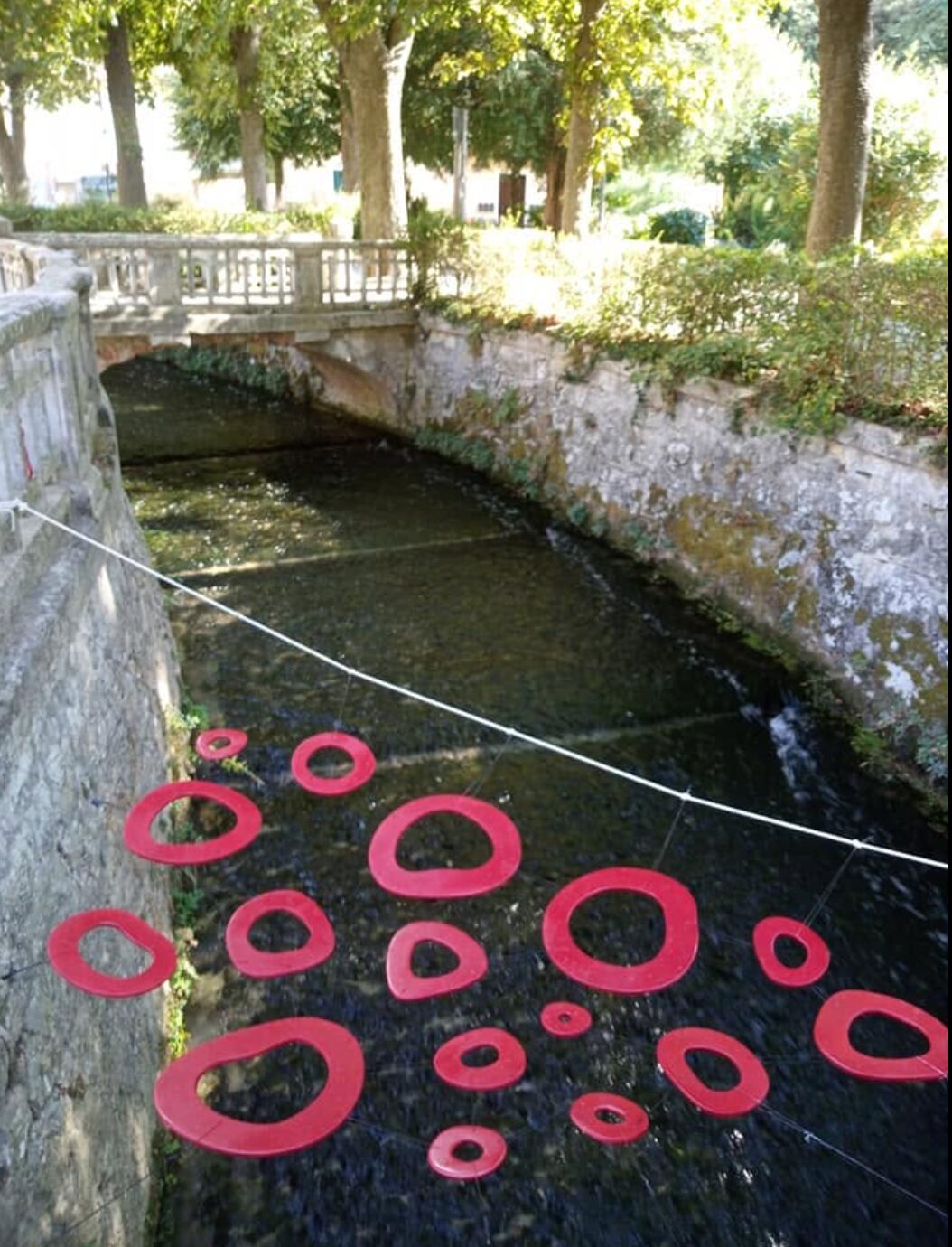
The material came from the encounter itself. Carla works in crochet. Back in Rome, Barbara drew the tree and sent it to her; Carla began making the forms. Barbara proposed a temporary installation to the Municipality of Pioraco, distributed among trees, the square and the river.
Mayor Matteo Cicconi welcomed the proposal and asked whether Barbara knew Pioraco was called the village of paper, water and the kiss. She did not. The project had found a place whose own history already held these elements together.
Making a distributed installation
Barbara made dozens of wooden forms in Quinto’s garage. Carla produced red crochet and white chains. Together they assembled a net of kisses to suspend above the river, then installed the work through the village in the August heat.
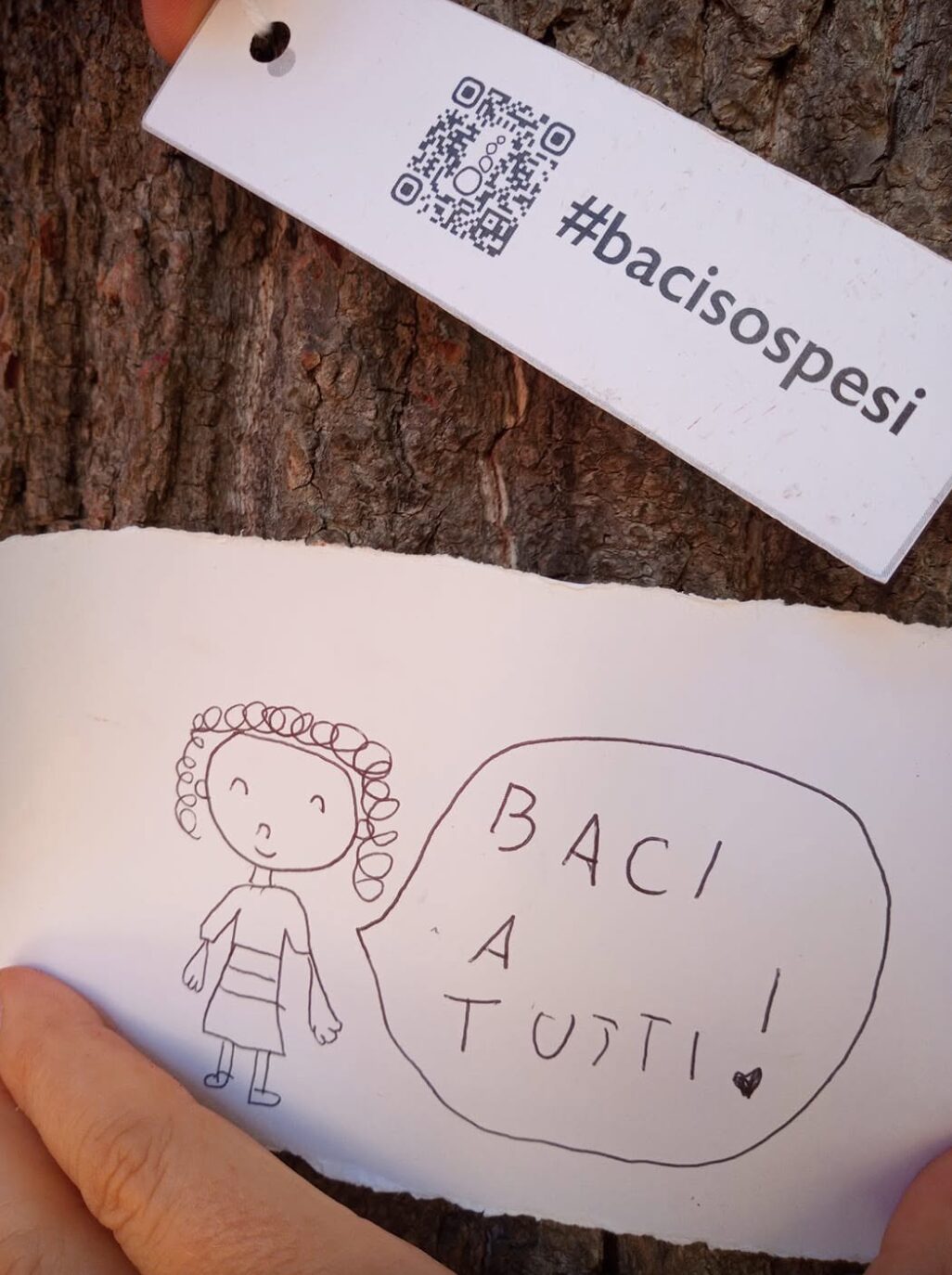
Wood and crochet gave the red forms different weights and textures. The hollow tree, the water and the movement through the village became part of the installation. People could leave messages in the work as they encountered it.
It opened on 11 August 2021. Mayor Cicconi made Barbara an honorary citizen of Pioraco. The recognition mattered to her because it acknowledged a relationship with the place, as well as an artwork.
A permanent adaptation
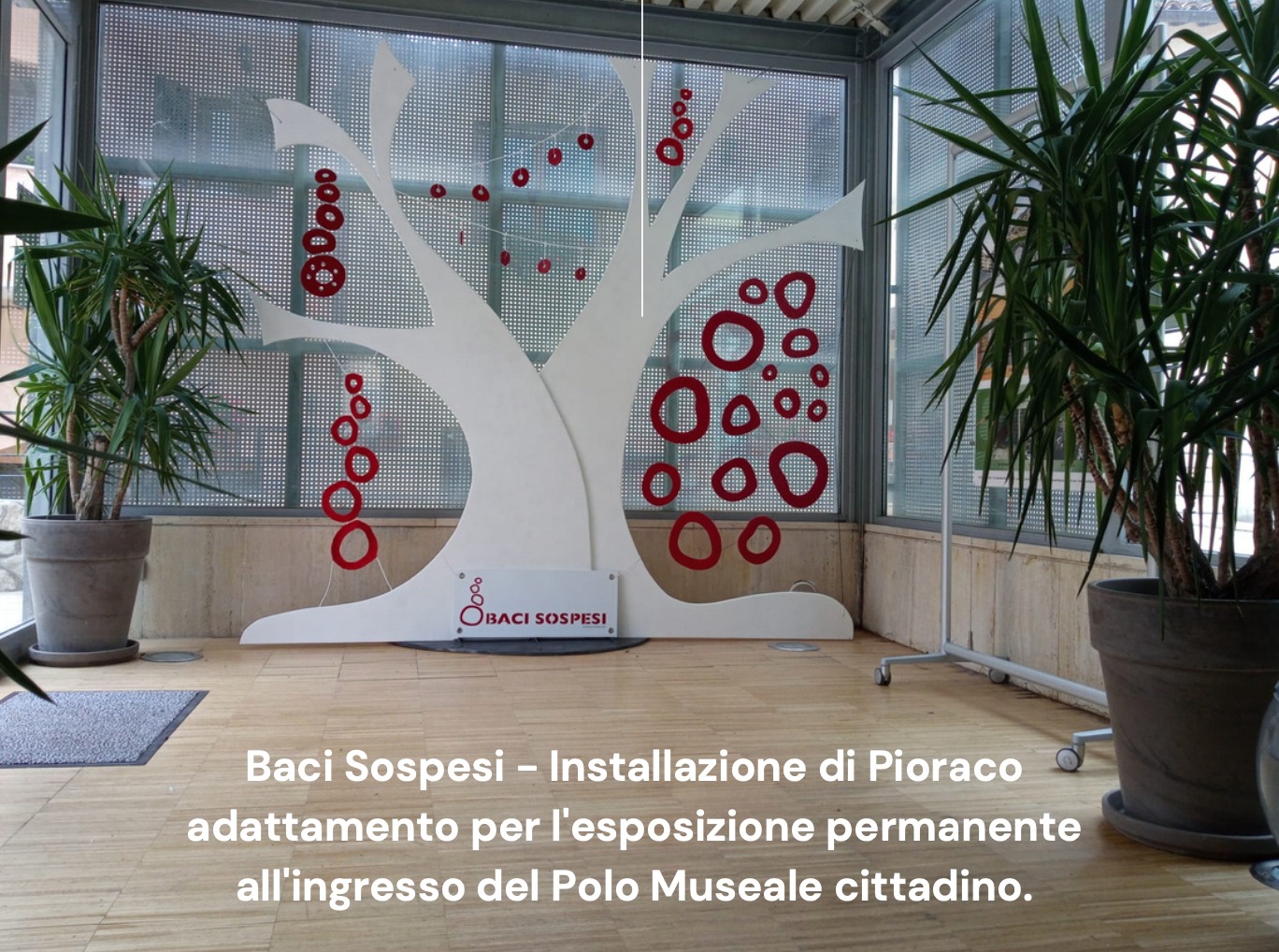
The temporary work was received so warmly that the Mayor asked for a permanent version inside the Museo della Carta e della Filigrana, the Paper and Watermark Museum. Barbara redesigned it as a white wooden tree holding a concentrated group of red forms. The smaller pieces still receive messages.
The museum occupies the historic paper mill beside the river. The same project acquired a different body while keeping its grammar: red individual forms, moving water, space between bodies, messages for strangers and free access.
The conception and artistic direction are Barbara’s. Crochet and realisation brought Carla, Quinto and other hands into the work. Site-specific art grows through this relationship between a proposition, a place and the people who make it possible.